Stone Masonry Benefits for Your Home in the GTA and Hamilton: Why Homeowners Choose Durable, Energy-Efficient, and Beautiful Stone Exteriors
Stone masonry combines natural stone, mortar, and skilled installation to create exterior cladding that delivers durability, energy performance, and lasting curb appeal for Ontario homes. This article explains how stone masonry achieves these outcomes, focusing on durability in freeze-thaw climates, thermal mass energy benefits, design choices for the GTA and Hamilton, maintenance realities, and measurable market value gains. Homeowners, property managers, and renovators will learn what drives stone’s longevity, how stone veneer compares to siding and stucco for energy efficiency, and which stone types best match local architectural styles. The guide maps practical considerations—material selection, water management details, and cost-versus-value evidence—then shows how professional workmanship preserves performance and maximizes resale impact. Throughout, we reference regional conditions (Toronto, Mississauga, Hamilton) and offer actionable guidance for planning a stone masonry project while highlighting where Rox Masonry’s local expertise can help with design, installation, and free consultation.
What Are the Key Benefits of Stone Masonry for Residential Homes?
Stone masonry delivers a package of benefits homeowners value: long-term durability, improved energy performance through thermal mass, timeless aesthetics that boost curb appeal, lower maintenance needs than many claddings, and measurable resale value uplift. The materials themselves—granite, limestone, and manufactured stone veneer—provide hardness and weather resistance, while mortar, flashing, and competent detailing control moisture and prevent common failures. Because these outcomes depend on proper installation and detailing, the result is both material performance and durable assemblies that protect the building envelope. Below are the top benefits in a quick, scannable format for homeowners evaluating exterior upgrades.
Stone masonry offers these primary advantages:
- Durability and longevity: Natural stone resists weathering and often outlasts other claddings.
- Energy efficiency: Thermal mass moderates indoor temperature swings, lowering heating and cooling loads.
- Timeless aesthetic value: Stone conveys permanence and enhances curb appeal for resale.
- Low maintenance: Minimal painting and infrequent sealing reduce lifecycle upkeep.
- Safety and resilience: Stone is non-combustible and less prone to pest or rot issues.
These benefits map directly to homeowner priorities—protecting the envelope, reducing operating costs, and improving marketability—so the next subsections unpack how each mechanism delivers value in practical terms.
How Does Stone Masonry Provide Exceptional Durability and Longevity?
Stone masonry provides exceptional durability because stone itself is a hard, erosion-resistant material and modern masonry assemblies combine appropriate mortar, substrate, and flashing to manage moisture and loads. Proper installation ensures that the stone acts as a durable outer skin while the substrate and flashing shed water away from structural elements. Historical examples and contemporary restorations both illustrate that well-built stone walls can last for decades or centuries when detailing prevents water intrusion. Regular inspection and timely restoration of mortar joints preserve the assembly, and masonry restoration specialists address issues before they propagate.
This durability discussion leads naturally into energy performance, where stone’s thermal properties contribute additional homeowner value.
In What Ways Does Stone Masonry Improve Energy Efficiency in GTA Homes?
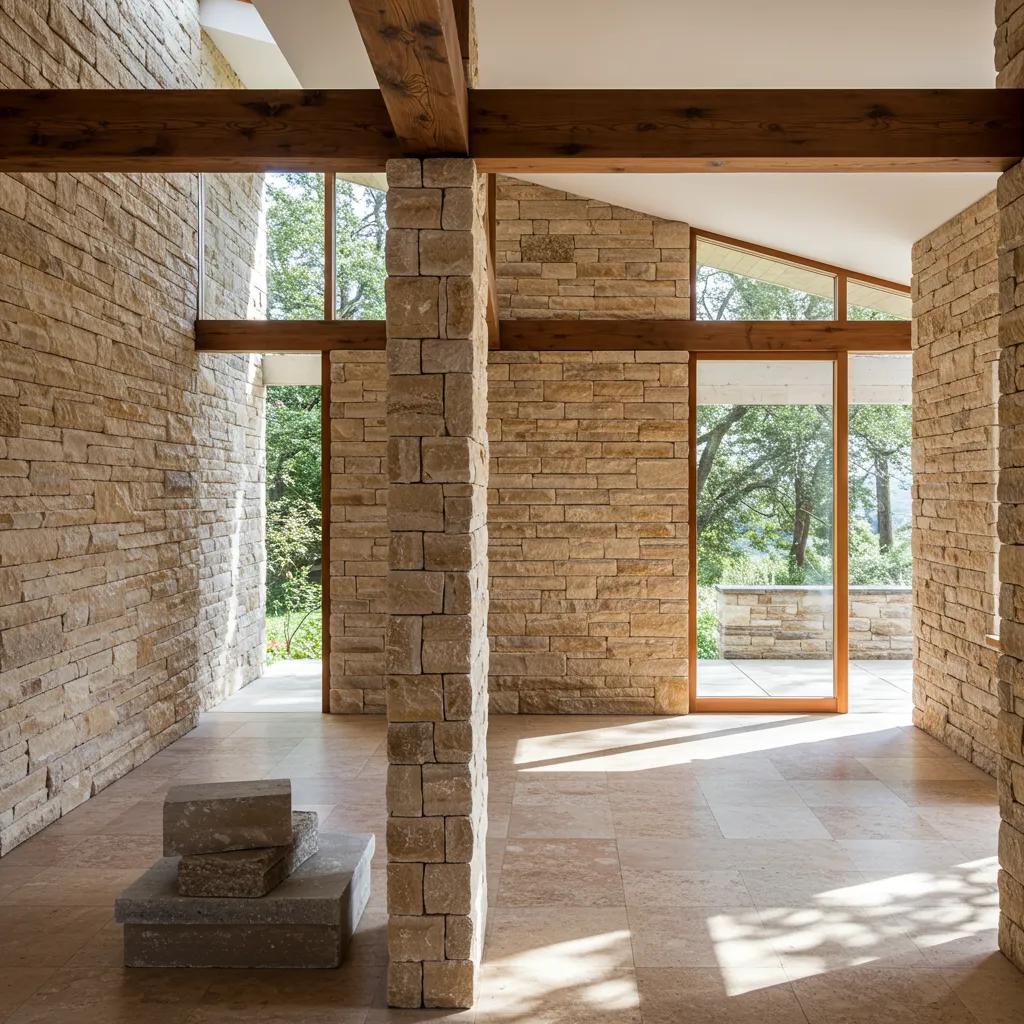
Stone masonry improves energy performance primarily through thermal mass: the material absorbs heat during warm periods and releases it slowly, smoothing indoor temperature swings and reducing peak heating or cooling demands. In Ontario’s climate, thermal mass helps moderate daytime heat in summer and stabilizes interior temperatures during cold snaps, provided the wall assembly includes appropriate insulation and air barriers. Typical energy savings vary with building orientation, insulation levels, and occupancy patterns; conservative estimates suggest double-digit percentage reductions in peak loads for well-designed assemblies. To realize these gains, designers pair stone cladding with a continuous insulation strategy and proper venting or cavity design.
Understanding thermal mass is essential before comparing stone to alternative claddings, which is the topic of the next subsection.
Why Is Stone Masonry Known for Its Timeless Aesthetic Appeal and Curb Value?
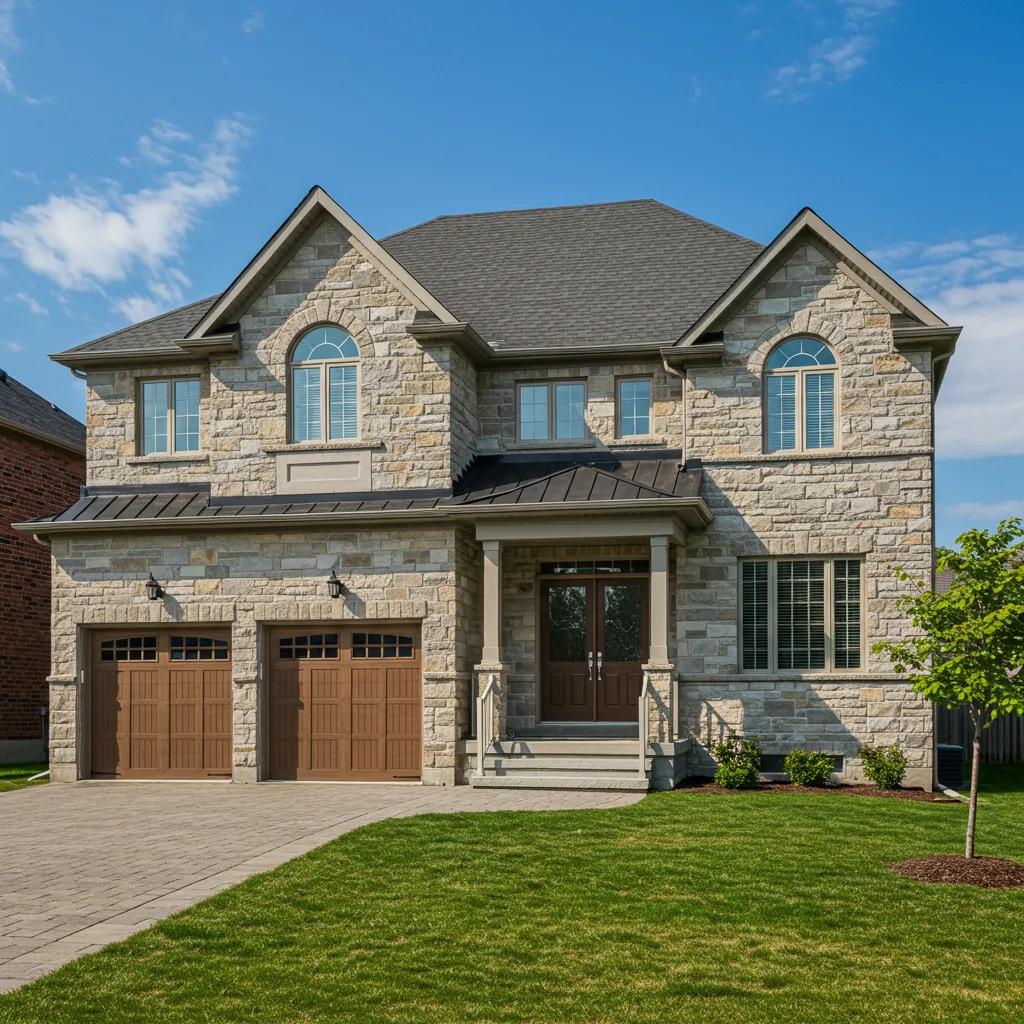
Stone masonry’s aesthetic appeal stems from natural texture, colour variation, and the way hand-laid or precisely veneered stone articulates shadows and architectural lines, creating an impression of permanence and quality. Whether used as full cladding, accent walls, or entry features, stone integrates with rooflines, trim, and landscaping to elevate curb appeal and attract buyers’ attention. The tactile texture and bespoke patterns contribute to perceived value, and buyers often associate stone with longevity and low maintenance. High-quality stonework paired with thoughtful design tends to command higher market interest and can contribute to measurable resale premiums in competitive neighbourhoods.
These visual and market effects prompt consideration of maintenance requirements, which affect long-term ownership costs and preservation of curb appeal.
How Does Stone Masonry Offer Low Maintenance Advantages for Homeowners?
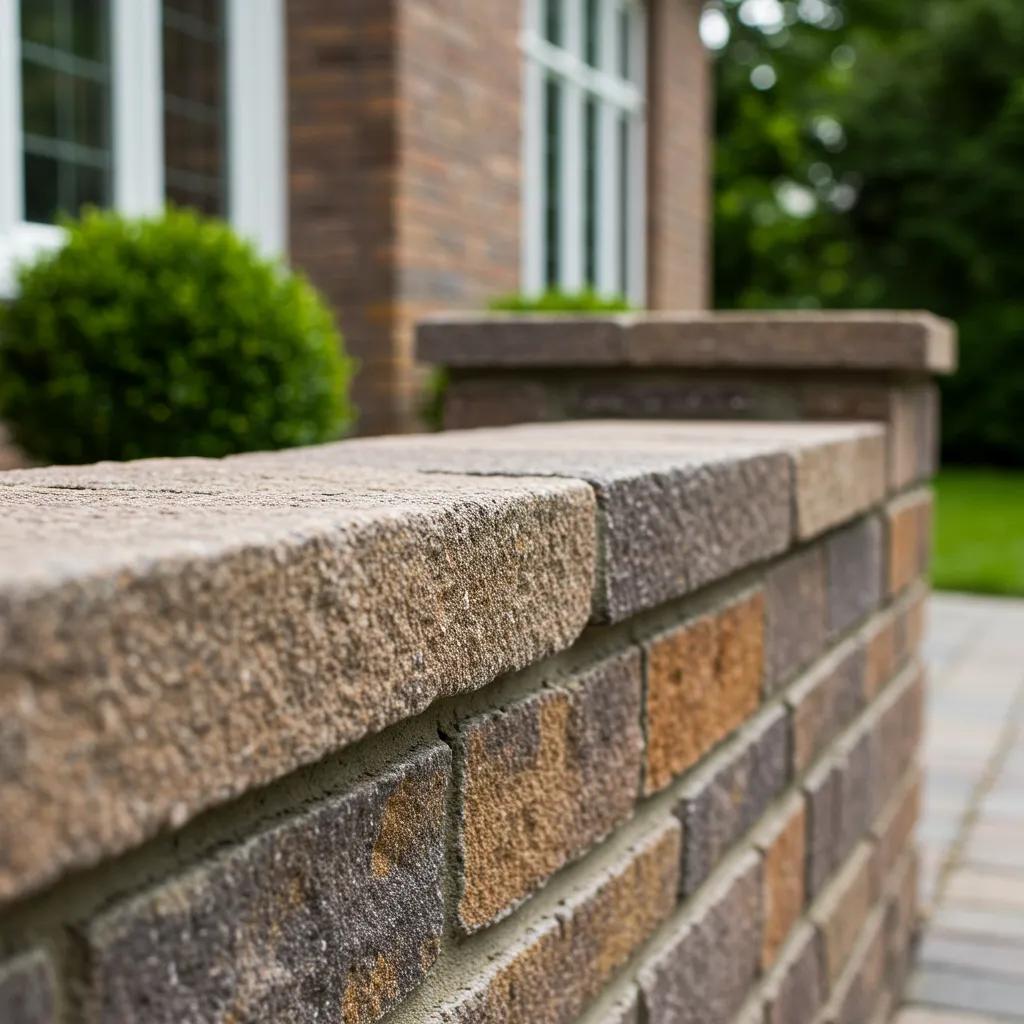
Stone masonry requires less frequent cosmetic maintenance than painted wood or vinyl because natural stone does not need repainting, and properly detailed assemblies minimize moisture intrusion that leads to rot. Routine maintenance typically includes annual cleaning, visual inspection of mortar joints, and resealing where appropriate for certain stone types; the intervals vary by material and exposure. Over decades, the avoidance of regular painting, staining, or siding replacement translates into lower life-cycle costs and less disruptive upkeep. When repairs are required, targeted repointing or stone replacement can restore performance without large-scale replacement.
Lower maintenance requirements also help protect resale value over time, which we examine next by looking at quantifiable ROI outcomes.
Can Stone Masonry Increase Your Home’s Resale Value?
Yes—stone masonry can increase resale value by improving curb appeal, signaling quality construction, and lowering perceived maintenance liabilities; industry data for manufactured stone veneer shows strong return-on-investment figures in recent Cost vs. Value studies. Specifically, the 2024 Cost vs. Value report highlighted a high ROI for stone veneer installations, indicating homeowners can recoup more than their cost in many markets. Realized resale uplift varies by neighbourhood and project scope, with conservative estimates often in the single-digit to low-teen percentage range for resale price increases. To maximize ROI, homeowners should prioritize quality materials and workmanship, choose projects that complement neighborhood character, and focus on high-impact areas like entryways and facades.
After assessing benefits and ROI, it’s crucial to consider regional climate resilience—how stone performs in Toronto-area weather—which is the next major section.
How Does Stone Masonry Withstand the Harsh Climate of Toronto, Mississauga, and Hamilton?
Stone masonry endures Ontario’s freeze-thaw cycles and heavy rain through a combination of material selection, appropriate mortar and joint design, and water management detailing such as flashing and drainage. The inherent properties of many natural stones make them resistant to surface erosion, while correctly executed cavities and weep systems prevent trapped moisture that leads to freeze-thaw damage. Contractors must select compatible mortars and specify protective measures for exposed edges and sills to prevent deterioration. Periodic inspections identify early flashing or joint failures so repairs can be scheduled before larger failures occur, preserving structural integrity across seasons.
Managing moisture and detailing is a practical step toward preventing pest and rot issues, which we discuss next.
What Makes Stone Masonry Resistant to Freeze-Thaw Cycles and Heavy Rain?
Resistance to freeze-thaw depends on stone porosity, mortar compatibility, and drainage provisions; low-porosity stones and mortars that match substrate movement reduce the risk of spalling and joint failure. Design details such as proper flashing at openings, sloped sills, cavity drainage, and weep holes ensure that water entering the assembly can exit safely instead of freezing inside. Regular inspection—particularly after severe weather—allows homeowners to identify mortar deterioration or compromised flashing early. When problems are found, targeted repointing or replacement of flashing prevents progressive damage and restores freeze-thaw resilience.
The impact of freeze-thaw cycles on natural stone properties is a critical factor in its long-term durability in regions like the GTA and Hamilton.
Effets des cycles de gel-dégel sur les propriétés et la durabilité de la pierre naturelle
1. La durabilité de la pierre naturelle dans un projet donné est généralement quantifiée en évaluant sa capacité de dégradation causée par une multitude de facteurs. L’action du gel a des effets significatifs sur la fracturation et la désintégration granulaire de la pierre en raison de bris mineurs et majeurs, surtout en présence d’eau. Cela se traduit par une structure plus poreuse et donc une diminution de la résistance et de la conductivité thermique du tissu minéral. L’objectif de cette étude est de quantifier les dommages d’altération de certaines pierres naturelles poreuses causés par des cycles de gel-dégel en laboratoire, au moyen de changements dans certaines propriétés physico-mécaniques (porosité apparente, vitesse des ondes P, valeurs colorimétriques, taux de transmission de vapeur d’eau et résistance au point de charge) et thermiques (conductivité thermique). À cette fin, une simulation expérimentale d’altération physique a été réalisée sur deux types de pierres naturelles poreuses commerciales, l’une carbonatée et l’autre magmatique : le travertin, le calcaire (biocalcarénite), la trachyan-délite et la pierre de tuf (ignimbrite), respectivement. Les études de laboratoire révèlent des variations considérables pour la trachyan-délite et la pierre de tuf par rapport aux changements de certaines propriétés intrinsèques. Les résultats démontrent clairement une résistance assez différente de ces pierres aux dommages causés par le gel et le dégel, et cette résistance s’est avérée fortement corrélée à leurs valeurs de conductivité thermique.
Effect of multi-cycle freeze-thaw tests on the physico-mechanical and thermal properties of some highly porous natural stones, İ Uğur, 2020
Preventing trapped moisture also reduces pest and rot risk in adjacent organic materials, which is the next consideration.
How Does Stone Masonry Protect Against Pests and Rot in Residential Properties?
Stone masonry is naturally inhospitable to wood-boring pests and does not provide a food source for insects, so it reduces the direct risk of pest infestations compared with wood claddings. By keeping moisture away from structural wood through good drainage and flashing, masonry assemblies also limit conditions that lead to rot in adjacent framing or trim. However, poor detailing—such as missing flashing or blocked weeps—can create pockets of moisture that attract pests or cause rot in nearby wood elements. Proper installation and routine inspections minimize these risks and maintain the masonry’s protective role.
Why Is Stone Masonry Fire Resistant and Structurally Reliable?
Stone is a non-combustible material that contributes to fire-resistant exterior assemblies and can slow fire spread compared with combustible claddings. Combined with solid substrate and correct anchoring, masonry adds structural robustness to facades and resists localized impacts and fire exposure better than many alternatives. Fire performance depends on the full assembly—stone, substrate, insulation, and penetrations—so integration with fire-stopping details and appropriate code compliance is essential. When fire resistance and long-term structural reliability are priorities, masonry assemblies offer a durable, low-risk option for owners concerned about safety in residential contexts.
How Does Stone Masonry Enhance Home Energy Performance and Reduce Utility Costs?
Stone masonry enhances energy performance primarily through thermal mass, which absorbs heat during peak periods and releases it slowly, thereby reducing peak heating and cooling loads when combined with proper insulation. The mechanism is straightforward: stone’s high heat capacity stores thermal energy and moderates indoor temperature swings, reducing the frequency and intensity of HVAC cycles. Quantified savings vary, with conservative regional estimates suggesting double-digit percentage reductions in peak loads for optimized assemblies. Below is an EAV table comparing stone to common exterior materials for thermal performance and estimated energy implications.
| Material Type | Thermal Mass | Insulation Interaction | Estimated Energy Impact |
|---|---|---|---|
| Stone (natural/veneer) | High | Works with cavity/continuous insulation to stabilize loads | Moderate to high reduction in peak loads (10–30%) |
| Vinyl siding | Low | Relies entirely on underlying insulation | Minimal thermal mass benefit; savings depend on insulation |
| Stucco | Medium | Integrates with rigid insulation or EIFS | Moderate effect; less thermal mass than stone |
What Is Thermal Mass and How Does It Regulate Indoor Temperatures?
Thermal mass is a material property describing the ability to store and release heat; materials with high heat capacity—like stone—absorb energy when temperatures rise and release it as temperatures fall, smoothing indoor fluctuations. In practice, a stone-clad exterior paired with appropriate insulation reduces temperature swings caused by daytime heating and cold nights, leading to fewer HVAC cycles and improved occupant comfort. The effect is most pronounced when interior thermal storage and building usage align with diurnal temperature patterns. Designers quantify thermal mass effects through dynamic energy modelling to estimate local savings.
How Much Can Stone Masonry Reduce Heating and Cooling Bills in Ontario Homes?
Typical savings from stone’s thermal mass depend on orientation, insulation, window performance, and occupant behaviour; conservative regional estimates suggest reductions in peak heating and cooling loads on the order of 10–25% for optimized assemblies, while real-world energy bill reductions may be lower depending on existing envelope performance. Factors that increase savings include high daytime solar gains in summer or large diurnal swings that thermal mass can moderate, and the presence of continuous insulation to maintain overall R-value. For precise expectations, an energy assessment or modelling during design helps project likely savings for a specific home.
How Does Stone Veneer Compare to Other Exterior Materials for Energy Efficiency?
Stone veneer combines lower weight with some thermal mass benefit compared with full-thickness stone, and when installed over a properly insulated substrate it offers better energy outcomes than thin siding alone. Compared to vinyl, stone veneer adds thermal inertia; compared to stucco or brick, differences hinge on assembly thickness and insulation strategy. Below is an EAV-style comparison of material trade-offs for homeowner decision-making.
| Exterior Finish | Thermal Behaviour | Installation Complexity | Cost vs. Performance |
|---|---|---|---|
| Stone veneer | Moderate thermal mass | Requires substrate, anchorage, flashing | Higher upfront, strong long-term performance |
| Brick | High thermal mass | Heavier structure, skilled labour | High upfront, durable and efficient |
| Stucco | Moderate | Specialized application, requires control joints | Moderate cost, variable performance |
| Vinyl siding | Low | Simple install, low weight | Low cost, relies on insulation for efficiency |
What Design Options and Natural Stone Types Are Available to Elevate Your Home’s Appearance?
Homeowners can choose from natural granite, limestone, flagstone, and manufactured stone veneer to achieve looks ranging from rustic to contemporary; each option offers distinct colour, texture, and durability profiles that suit different architectural styles. Applications include full-clad facades, accent walls, entryways, chimneys, patios, and fireplaces—each using stone differently to frame lines and create focal points. Designers consider colour palette, texture scale, and joint pattern to match rooflines and landscaping, and samples or mockups are essential to visualize the final effect.
| Stone Type | Durability | Colour / Texture | Typical Use |
|---|---|---|---|
| Granite | High | Cool to warm tones, coarse texture | Cladding, accents, steps |
| Limestone | Medium-high | Warm tones, smooth to fine texture | Facades, trim, quoins |
| Flagstone | Medium | Varied, flat surfaces | Patios, walkways |
| Manufactured stone veneer | Variable | Wide colour range, engineered texture | Accent walls, full veneer |
Choosing the right stone leads to design plans that balance aesthetics and performance; the following list summarizes common design applications.
- Accent features: stone around entryways and windows for architectural focus.
- Full-clad facades: comprehensive stone coverage to maximize impact and durability.
- Outdoor living: flagstone patios and stone retaining walls for functional beauty.
Which Stone Types Are Best for Residential Exteriors in the GTA?
For GTA homes, granite and limestone are often recommended for their durability against freeze-thaw, while manufactured stone veneer offers aesthetic flexibility at lower weight and cost. Granite stands up well to heavy exposure and retains texture over time, whereas limestone provides warm tones consistent with many local architectural styles. Manufactured veneers allow complex profiles and predictable installation, but selection should consider local climate and exposure. Availability, budget, and design intent guide the final choice, and mockups help confirm colour and texture on site.
How Can Custom Stonework and Stone Veneers Transform Your Home’s Curb Appeal?
Custom stonework and veneers can convert ordinary façades into signature designs by creating framed entryways, chimney surrounds, porch piers, and foundation treatments that draw the eye and suggest permanence. Accent walls and carefully detailed transitions to windows and doors provide depth and contrast that photography and in-person viewings reward. High-impact projects focus on focal points rather than entire façades when budgets are constrained, delivering noticeable resale and aesthetic returns. A portfolio-driven approach helps homeowners visualize before-and-after outcomes and prioritize interventions.
What Are the Colour and Texture Variations That Add Architectural Character?
Colour and texture choices influence perceived scale and style: lighter stones enlarge façades visually, while darker, coarse textures emphasize solidity and traditional charm. Smooth limestone suits classical details and refined trim, while rougher granite or ledgestone provides rustic character and strong shadow lines. Pairing stone with trim, roof colour, and landscaping creates a cohesive composition, and homeowners should evaluate physical samples in natural light to confirm choices. Designers often create a short palette of complementary materials to guide final selections.
What Makes Stone Masonry a Low Maintenance Choice for Homeowners?
Stone’s minimal need for repainting and its resistance to surface degradation in many climates reduce routine maintenance compared to wood or painted exteriors. Typical homeowner tasks include periodic cleaning, inspecting and, when necessary, resealing certain stones, and occasional repointing of mortar joints. Over decades, the avoidance of repainting cycles and siding replacement yields lifecycle savings that often offset higher upfront costs. The EAV table below compares maintenance tasks and lifespans across common exterior materials to clarify long-term implications for budgets and planning.
| Exterior Material | Maintenance Tasks / Frequency | Typical Lifespan |
|---|---|---|
| Stone masonry | Clean annually; repoint every 20–40 years | 50+ years |
| Vinyl siding | Clean periodically; replace sections as needed | 20–40 years |
| Wood siding | Paint/stain every 5–10 years; repair rot | 20–50 years |
| Stucco | Inspect cracks annually; repair as necessary | 30–50 years |
How Often Does Stone Masonry Require Cleaning and Sealing?
Most stone exteriors benefit from an annual visual inspection and gentle cleaning to remove biological growth, dirt, and staining; sealing intervals vary by stone porosity but often fall in the multi-year range (e.g., every 3–10 years) for susceptible types. Cleaning methods should avoid harsh pressure washing that can damage mortar; soft washing and appropriate cleaners preserve finish and joints. Homeowners should plan seasonal inspections—after winter and before freeze-up—to identify loose mortar or failed flashing that require professional attention.
What Are the Long-Term Savings Compared to Other Exterior Materials?
Long-term savings derive from avoided repainting cycles, reduced replacement frequency, and lower susceptibility to moisture-driven failures that generate costly repairs. While stone’s initial cost is typically higher, lifecycle analyses often show lower total cost of ownership across decades due to durability and lower maintenance. These savings depend on local contractor quality and detailing; investments in expert installation and proper flashing yield the best long-term return. For many homeowners, the combination of maintenance savings and resale premium justifies the upfront investment.
How Does Stone Masonry Resist Weathering and Damage Over Time?
Stone resists weathering via its mineral composition and by shedding moisture when assemblies include effective drainage and protective details; common wear points include mortar joints and exposed sills, which are repaired through repointing or selective stone replacement. Preventive measures—such as maintaining flashing, clearing weep holes, and ensuring proper landscaping grades—limit splash-back and freeze-thaw exposure. When damage occurs, experienced masons can perform targeted restoration that restores both appearance and function, preserving the investment and extending the façade’s performance horizon.
How Does Stone Masonry Increase Your Home’s Market Value and Return on Investment?
Stone masonry increases market value by enhancing curb appeal, signaling durable construction, and reducing perceived maintenance liabilities for buyers—factors that often translate to higher offers and faster sales. Industry data such as the 2024 Cost vs. Value report highlights the high ROI for manufactured stone veneer installations, demonstrating that carefully scoped stone projects can return a substantial portion of their cost at resale. Local market dynamics matter: neighbourhood expectations, project scope, and craftsmanship strongly influence realized premiums. Below we summarize the key value drivers in a concise list.
- Visual differentiation: stronger first impressions in listings and showings.
- Perceived quality: buyers associate stone with longevity and low upkeep.
- Energy and safety features: thermal mass and non-combustibility add objective value.
What Does the 2024 Cost vs. Value Report Say About Stone Veneer ROI?
The 2024 Cost vs. Value report shows a notably high return for manufactured stone veneer projects, indicating homeowners often recover a large share of project costs at resale and, in many cases, achieve a positive net return relative to other common exterior upgrades. This figure underscores the market appetite for stone aesthetics and suggests that targeted veneer applications—such as entry facades and chimney surrounds—can be especially effective. To maximize ROI, homeowners should focus on quality installation, coordinate designs with neighbourhood character, and prioritize high-visibility areas rather than wholesale exterior overhauls.
How Much Can Stone Masonry Boost Your Home’s Resale Price in the GTA and Hamilton?
Local resale uplift varies, but reasonable ranges for visible, well-executed stone upgrades fall between approximately 5% and 15% of home value depending on neighbourhood expectations, project scope, and execution quality. Projects that enhance curb appeal without over-improving relative to comparable homes tend to capture the best premiums. Important variables include the extent of stone coverage, the coherence with nearby architectural styles, and the quality of craftsmanship. Sellers and buyers should consider targeted stone interventions where they align with local market preferences to maximize return.
Why Do Buyers Prefer Homes with Natural Stone Exteriors?
Buyers often prefer stone-clad homes because stone signals permanence, low maintenance, and architectural refinement—attributes that reduce perceived risk and appeal to long-term ownership. The sensory qualities of stone—texture, weight, and colour—create an emotional response tied to perceived quality and security. Additionally, demonstrable benefits such as lower ongoing maintenance and energy moderation reinforce buyers’ decisions. Professional installation and documentation of recent work further increase buyer confidence and support higher valuations.
Why Choose Rox Masonry for Your Stone Masonry Project in Toronto and Surrounding Areas?
Rox Masonry is positioned as a masonry contractor specializing in comprehensive masonry restoration services across the Greater Toronto Area (GTA), Toronto, Mississauga, and Hamilton, offering services that include brick and stone veneers, flagstones, masonry restoration, and chimney repair. Their selling points emphasize qualified professionals, high craftsmanship, local expertise with Toronto-area climate considerations, design excellence, timely project completion, and customer satisfaction. Rox Masonry provides free consultations and quotes, helping homeowners understand scope, expected outcomes, and cost drivers before work begins. Choosing a local specialist reduces the risk of design or detailing mistakes that compromise freeze-thaw resilience or energy performance.
The following bullets list Rox Masonry’s UVPs to help homeowners compare providers.
- Qualified professionals and high craftsmanship focused on lasting results.
- Local expertise tailored to GTA/Hamilton climate and building styles.
- Design collaboration to align stone choices with architectural character.
- Free consultations and quotes to plan scope and expectations.
How Does Rox Masonry’s Local Expertise Benefit Your Home’s Stone Masonry?
Rox Masonry’s local expertise means material selection and detailing are informed by Ontario’s freeze-thaw cycles, local supplier availability, and common building practices, reducing the probability of moisture-related failures. Knowledge of suitable mortars, flashing strategies, and substrate preferences preserves longevity and energy performance in the GTA climate. Local project experience also streamlines permit coordination and scheduling for timely completion. For homeowners, this local knowledge translates into installations that are both beautiful and resilient under regional conditions.
What Craftsmanship and Quality Standards Does Rox Masonry Uphold?
Rox Masonry emphasizes skilled trades, consistent inspection during install, and finish-quality checks that ensure mortar joints, flashing, and anchors meet performance standards. Their approach includes material vetting to match stone properties with exposure conditions and documented quality control steps that protect long-term durability. Timely client communication and clear project milestones support on-time completion and reduce surprises. For homeowners, these standards help protect the initial investment and maximize long-term resale and performance benefits.
How Can You Get a Free Consultation and Quote for Your Stone Masonry Project?
To request a free consultation and quote, homeowners prepare photos of the project area, a brief description of desired outcomes, and relevant property information; Rox Masonry will typically review materials, suggest scope and design alternatives, and provide an estimated timeline and written quote following an initial assessment. The consultation covers material options (natural stone vs manufactured veneer), detailing recommendations for thermal performance and moisture control, and a clear summary of next steps should the homeowner proceed. Turnaround times for quotes vary with project complexity, but an initial estimate and scope clarification are provided as part of the free consultation.
What Are the Most Common Questions About Stone Masonry Benefits for Homeowners?
Homeowners frequently ask succinct, practical questions about stone masonry benefits, durability, energy performance, value, and maintenance; clear, direct answers help decision-making and support featured-snippet-style queries. Below are direct answers to typical questions followed by brief clarifying points designed for quick retrieval when planning a project or evaluating trades.
What Are the Primary Benefits of Stone Masonry for a Home?
Stone masonry delivers five primary benefits: exceptional durability, thermal mass energy advantages, timeless aesthetics that boost curb appeal, lower routine maintenance compared with many claddings, and potential resale value uplift. These benefits combine to protect the building envelope, reduce lifecycle costs, and enhance marketability. When implemented with proper detailing and insulation, stone also contributes to safety and fire resistance. Homeowners should balance project scope with neighborhood context to secure the best outcomes.
Does Stone Masonry Really Increase Home Value?
Yes; stone masonry commonly increases perceived home value due to improved curb appeal and reduced maintenance concerns, with data indicating significant ROI for stone veneer projects in recent Cost vs. Value reporting. Realized resale uplift depends on workmanship, project scope, and neighborhood comparables, with typical ranges of 5–15% uplift for well-executed, visible upgrades. Homeowners maximize value by focusing on high-impact areas and ensuring professional installation.
Is Stone Masonry Energy Efficient Compared to Other Materials?
Stone masonry provides energy-efficiency benefits through thermal mass, which moderates temperature swings and reduces peak HVAC demands when paired with adequate insulation; compared to siding, stone offers additional thermal inertia, while performance versus stucco or brick depends on assembly design. The net efficiency advantage requires careful detailing and insulation integration to translate material properties into utility savings. Energy modelling or assessment during design helps estimate potential savings.
How Durable Is Stone Masonry Against Canadian Weather?
Stone masonry is highly durable when installed with proper flashings, compatible mortar, and drainage provisions to manage freeze-thaw cycles and heavy precipitation; routine inspection and timely repointing protect against common deterioration. Durability also hinges on stone selection—low-porosity stones and appropriate installation practices provide the strongest resistance to Canadian weather extremes. Preventive maintenance is simple and effective at preserving longevity.
What Maintenance Does Stone Masonry Require Over Time?
Maintenance typically includes annual visual inspections, gentle cleaning as needed, resealing for certain porous stones every few years, and repointing of mortar joints on multi-decade cycles when necessary. Homeowners handle minor cleaning, while professional inspections and masonry restoration address structural or joint failures. Proactive maintenance avoids large-scale replacements and maintains both performance and curb appeal.
For homeowners ready to discuss a project, Rox Masonry offers free consultations and quotes—prepare project photos and basic scope ideas to start the conversation with a local masonry specialist.
Frequently Asked Questions
What types of stone are best for masonry in the GTA?
In the Greater Toronto Area, granite and limestone are highly recommended for stone masonry due to their durability and resistance to freeze-thaw cycles. Granite is particularly robust and maintains its texture over time, making it ideal for high-exposure areas. Limestone, with its warm tones, complements many local architectural styles. Manufactured stone veneer is also a popular choice, offering aesthetic flexibility at a lower weight and cost. Homeowners should consider their specific design goals and local climate when selecting stone types.
How does stone masonry compare to other materials in terms of energy efficiency?
Stone masonry excels in energy efficiency due to its thermal mass, which helps moderate indoor temperatures by absorbing and releasing heat. Compared to materials like vinyl siding, stone provides additional thermal inertia, leading to reduced heating and cooling demands. While stucco and brick also offer some thermal benefits, the effectiveness of stone largely depends on proper insulation and assembly design. Homeowners should consult energy modelling to assess potential savings based on their specific home conditions.
What are the common design applications for stone masonry?
Stone masonry can be applied in various design contexts, including full-clad facades, accent walls, and entry features. Homeowners often use stone to create focal points around doorways, chimneys, and patios, enhancing both aesthetics and functionality. Custom stonework can transform ordinary spaces into visually striking areas, while careful consideration of colour and texture can harmonize with existing architectural elements. Designers typically recommend creating mockups to visualize the final look before installation.
How can homeowners ensure the longevity of their stone masonry?
To ensure the longevity of stone masonry, homeowners should prioritize proper installation, including effective drainage and moisture management. Regular inspections and maintenance, such as cleaning and repointing mortar joints, are essential to prevent deterioration. Additionally, addressing any issues promptly—like damaged flashing or loose stones—can help maintain the integrity of the masonry. Engaging experienced professionals for installation and maintenance can significantly enhance the durability and performance of stonework over time.
What are the cost considerations for a stone masonry project?
The cost of a stone masonry project can vary widely based on factors such as material selection, project scope, and installation complexity. While natural stone typically has a higher upfront cost compared to alternatives like vinyl siding, its durability and low maintenance needs can lead to long-term savings. Homeowners should consider the potential return on investment, especially in terms of increased resale value and reduced upkeep costs. Obtaining multiple quotes and consulting with local experts can help clarify budget expectations.
How does stone masonry contribute to a home’s safety and resilience?
Stone masonry enhances a home’s safety and resilience by being non-combustible, which reduces fire risk compared to wood-based materials. Its robust structure can withstand impacts and harsh weather conditions, making it a reliable choice for homeowners. Additionally, proper detailing and installation can prevent moisture intrusion, which mitigates the risk of rot and pest infestations. Overall, stone masonry provides a durable and secure exterior that contributes to the long-term safety of residential properties.
Conclusion
Stone masonry offers homeowners a unique blend of durability, energy efficiency, and timeless aesthetic appeal, making it a smart investment for any property. By choosing quality materials and professional installation, you can enhance your home’s curb appeal while enjoying lower maintenance costs and increased resale value. With Rox Masonry’s local expertise, you can ensure that your stone masonry project meets both your design aspirations and the demands of the Ontario climate. Contact us today to explore how we can help you transform your home with beautiful stonework.